

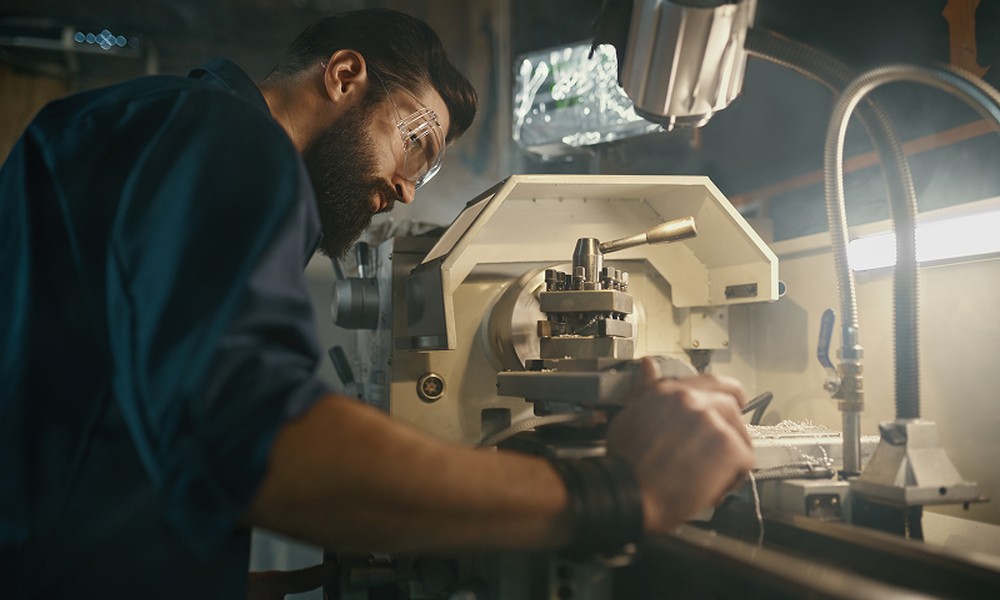
Key Takeaways
- CNC lathe machining services provide sub-millimetre precision for complex, cylindrical engineering components.
- Automated programming eliminates the risk of human error during high-volume production cycles.
- Sophisticated tooling options allow for the creation of exceptional surface finishes that meet strict industrial standards.
- Consistent repeatability ensures that every part in a large batch adheres to the exact same technical specifications.
Introduction
Precision is the cornerstone of modern engineering, especially in sectors where even a microscopic deviation can lead to mechanical failure. As industries like aerospace, medical device manufacturing, and automotive engineering evolve, the demand for high-tolerance components continues to grow. These parts require exact dimensions and flawless finishes to function within complex assemblies. Traditional manual machining often falls short of these rigorous demands, which is why professionals rely on advanced CNC lathe machining services. By integrating computerised control with high-speed rotational cutting, these services bridge the gap between conceptual design and physical reality. This article explores how modern machining techniques support the production of parts that must meet the most demanding tolerances in the industry.
The Precision of Computerised Numerical Control
The primary advantage of CNC lathe services lies in the removal of manual variance from the manufacturing process. In a manual setup, the skill of the operator dictates the final quality of the part, which introduces natural fluctuations over a long shift. CNC systems use digital blueprints to direct the cutting tools with absolute certainty. This computer-led approach allows for tolerances as tight as a few microns. For engineers, this means that a design for a shaft, valve, or fastener will be translated into a physical object with total fidelity. The software calculates every movement, speed, and depth of cut, ensuring that the physical material conforms exactly to the CAD model. This level of control is essential when creating components for delicate machinery where friction and fit are critical factors.
Material Versatility and Surface Integrity
High-tolerance production is not just about the final dimensions; it also involves the integrity of the material and the quality of the surface finish. Professional CNC lathe machining services work with an extensive range of materials, including stainless steel, titanium, brass, and high-grade plastics. Each material reacts differently to heat and pressure during the cutting process. Modern CNC lathes are equipped with advanced cooling systems and variable speed controls that prevent thermal expansion or warping during the build. This preservation of material properties ensures that the component remains stable even under high-stress conditions. Furthermore, the ability to achieve a mirror-like surface finish directly on the lathe reduces the need for secondary polishing processes, which often saves time and maintains the original dimensional accuracy of the part.
Consistency Across Large Production Batches
When a procurement team orders thousands of identical components, consistency becomes the most important metric of success. CNC lathe services excel in repeatability, which is the ability to produce the same result over and over again without deviation. Once the initial programme is set and the tools are calibrated, the machine can run continuously while producing parts that are virtually identical to the first unit. This reliability is vital for assembly lines where components from different batches must fit together perfectly. Unlike manual processes that might see a drift in accuracy as the day progresses, automated lathes maintain their calibration through sophisticated sensor feedback loops. This ensures that the final component in a run of ten thousand is just as precise as the prototype, reducing waste and lowering total production costs.
Enhancing Design Flexibility for Engineers
The evolution of CNC lathe machining services has significantly expanded the horizons for design engineers. Modern multi-axis lathes can perform complex operations that were previously thought impossible on a single machine. By combining turning with milling and drilling capabilities, these machines can produce intricate geometries in a single setup. This reduction in the number of times a part is handled or moved between machines is a major factor in maintaining high tolerances. Every time a component is reclamped, there is a risk of misalignment. By completing the majority of the work on one CNC lathe, the manufacturer protects the concentricity and alignment of the part. This capability allows engineers to design more complex, high-performance components without worrying about the limitations of traditional fabrication methods.
Conclusion
Achieving high-tolerance results requires a combination of advanced technology, expert programming, and high-quality materials. CNC lathe machining services provide the necessary infrastructure to meet these challenges head-on, offering a level of precision and repeatability that manual methods cannot match. From ensuring dimensional accuracy to providing superior surface finishes, these services are indispensable for modern industrial applications. As procurement teams and engineers look to the future, the role of automated turning will only become more central to the manufacturing landscape. By investing in these precision services, businesses can ensure that their products meet the highest standards of safety and performance.
Contact Disk Precision Group – Vietnam today to learn more about our services.