

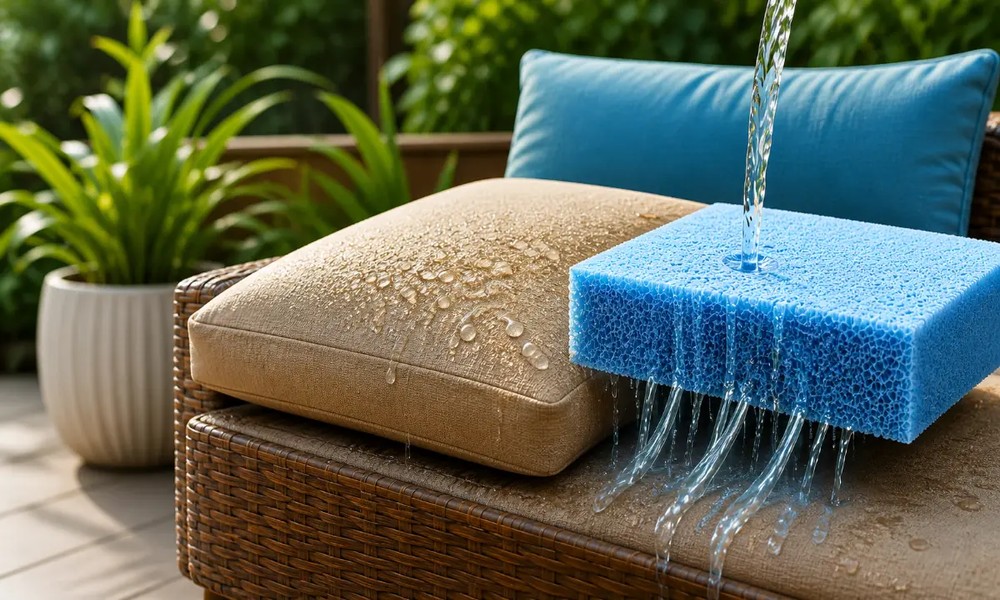
Foam technology has advanced significantly to meet the demands of industries that require durability, moisture resistance, and long-lasting performance. One of the most widely used materials today is fast drying foam, designed to handle environments where exposure to water and humidity is common.
Unlike traditional foam that absorbs moisture, fast drying foam features an open-cell structure that allows water and air to pass through quickly. This helps the material dry faster and reduces the risk of mold or odor formation.
Industries such as furniture manufacturing, marine design, and outdoor seating increasingly rely on these advanced foam materials to ensure reliable performance in demanding conditions.
What Makes InstaDry Foam Different From Regular Foam
InstaDry foam is a specialized type of quick-drying material engineered for outdoor and moisture-prone environments. It is commonly manufactured using reticulated foam technology, which creates a highly porous structure that promotes airflow and water drainage.
This design provides several practical advantages, including:
- Rapid water drainage: Allows moisture to flow out instead of staying trapped
- Improved airflow: Supports faster evaporation
- Mold resistance: Reduces microbial growth caused by trapped moisture
- Long-term durability: Maintains shape even after repeated exposure to water
- Low maintenance: Requires less frequent drying or replacement
Because of these benefits, InstaDry foam is widely used in outdoor furniture, marine seating, and hospitality environments where quick drying is essential.
Applications of Quick Dry Outdoor Foam in Various Industries
Quick dry outdoor foam is specifically designed for environments exposed to rain, humidity, or water splashes. Its structure allows water to pass through freely, preventing the heavy and damp feeling associated with traditional foam materials.
Some of the most common applications include:
- Garden and patio furniture
- Poolside and resort seating
- Marine and boat cushions
- Balcony and terrace furniture
- Outdoor café and restaurant seating
This type of foam helps maintain comfort while reducing downtime caused by wet seating surfaces. In hospitality settings, faster drying cushions improve usability and reduce maintenance efforts.
Why Fast Dry Foam Is Ideal for Moisture-Prone Environments
Many industries require materials that remain functional even in wet conditions. Fast drying foam is designed to handle continuous exposure to moisture while maintaining structural strength.
Its open-cell design allows water to drain quickly, preventing internal damage and extending the life of the material. In contrast, conventional foam absorbs water and may take hours or days to dry completely.
Advantages of fast drying foam include:
- Reduced moisture retention
- Faster drying time after rainfall
- Improved hygiene and cleanliness
- Resistance to mildew and odor formation
- Longer service life compared to standard foam
These qualities make fast drying foam a reliable solution for outdoor and industrial use.
The Importance of Sponge Paint Roller Foam in Surface Applications
Beyond seating and cushioning applications, foam also plays a crucial role in finishing and coating processes. Sponge paint roller foam is widely used in painting tools designed to deliver smooth and consistent results.
This type of foam is engineered to absorb and release paint evenly, allowing users to create uniform textures across surfaces. It is commonly used in both decorative and industrial coating processes.
Typical applications of sponge paint roller foam include:
- Wall texture application
- Decorative interior painting
- Industrial surface coating
- Furniture finishing
- DIY painting projects
Modern sponge paint roller foam is manufactured using reticulated poll.
Key Factors to Consider When Selecting Fast Drying Foam
Choosing the right foam material requires careful evaluation of its performance characteristics. Whether selecting quick dry outdoor foam or specialized painting foam, understanding technical properties is essential.
Important factors to review include:
- Pore structure: Open-cell designs improve drainage and airflow
- Density levels: Higher density provides better durability
- Water resistance: Essential for outdoor or marine environments
- Load-bearing capacity: Determines foam strength and comfort
- Customization capability: Ensures compatibility with specific applications
Evaluating these aspects helps industries select foam materials that meet both functional and durability requirements.
Partnering With Reliable Foam Manufacturers for Quality Results
Selecting high-performance foam requires working with manufacturers who specialize in advanced material engineering. Experienced producers focus on creating durable foam solutions that meet modern industrial and commercial demands.
Companies provide specialized foam products designed for outdoor, industrial, and coating applications. Their solutions include advanced fast drying foam and quick dry outdoor foam options developed to perform reliably in demanding environments.
Working with established manufacturers ensures consistent material quality, improved durability, and long-term product reliability.
Choosing the Right Quick Dry Foam for Long-Term Performance
Fast drying foam technologies have transformed the way industries approach moisture management and durability. From InstaDry foam used in outdoor seating to sponge paint roller materials designed for precision coating, modern foam solutions support both performance and efficiency.
Understanding the properties of quick dry outdoor foam and related materials helps businesses make informed decisions when selecting products for specific applications. With proper material selection and reliable manufacturing support, foam products can deliver long-lasting performance across a wide range of environments.
————————————————————————————————————————-