

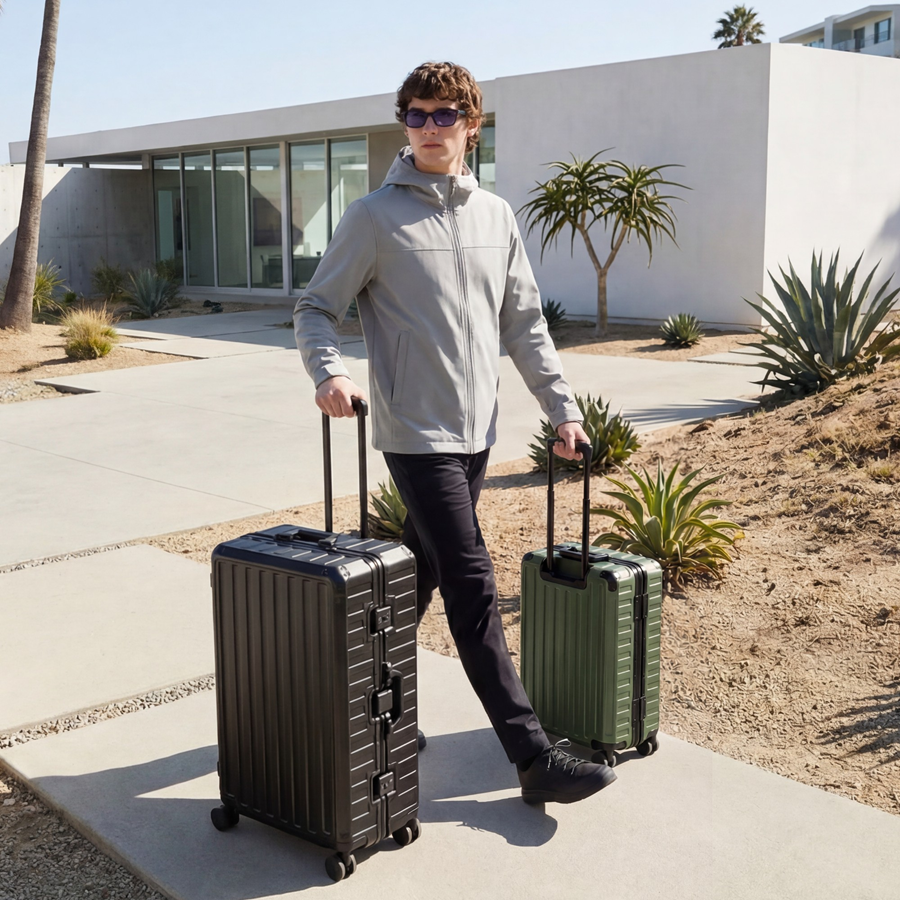
Mastering the art of the under-seat fit is a game-changer for travelers, whether you’re a basic economy regular or a minimalist adventurer trying to avoid the overhead bin scramble. However, this technique is not only about the size of your carry-on luggage underseat on paper. To fit your bag, you need to navigate the hidden obstacles beneath it.
If you want to ensure your carry-on expandable luggage set slides in smoothly every time, here are the critical factors to consider before you head to the airport.
Personal Item vs Carry-On Distinction
The biggest mistake travelers often make is confusing carry-on luggage with a personal item. Most airlines define a carry-on as a bag roughly 22 x 14 x 9 inches, which is universally destined for the overhead bin.
On the other hand, a personal item is what is intended to fit under the seat, usually maxing out at 18 x 14 x 8 inches. If your bag is a hard-shell underseat roller, check your airline’s specific dimensions. An extra inch of wheel height can leave you stuck in the aisle.
The Aircraft Factor
The plane you’ll be boarding will also play a role in how you can fit a carry-on under your seat. If you are flying on a large wide-body jet, such as the Airbus A350, the under-seat space is often generous. However, regional jets or smaller puddle jumpers typically have notoriously cramped underseats. Be sure to check ahead of time to ensure you are prepared upon boarding.
Seat Location
The seat location is the hidden variable that even the most experienced travelers often miss. To help you better understand how it works, below is a quick guide:
- The Aisle Seat – Because of the way the seat frames are designed, aisle seats often have narrower storage spaces than middle or window seats.
- The Bulkhead Rule – If you are sitting in the first row of a cabin section, there is no seat in front of you. This means zero under-based storage, and your luggage must go in the overhead bin for takeoff and landing, regardless of size.
- Entertainment Boxes – On older or long-haul aircraft, you might find a metal equipment box bolted to the floor under the seat. Also called the in-flight entertainment system, this box may cut your storage space in half.
Hard-Shell vs Soft Sided
When it comes to under-seat storage, squish-ability is imperative. A soft-sided backpack or duffel bag can be compressed to fit under the low seat frame. A hard-sided mini suitcase is unforgiving. If it’s half an inch too tall, you may be forced to gate-check it, as it will not fit at all.
Foot Room Compromise
It is important to remember that placing a large bag under the seat means sacrificing your legroom. For a one-hour flight, this might be fine. For a six-hour cross-country trek, having your knees pushed up to your chest because your bag is too big can be uncomfortable. Aim for a bag that is small enough to leave room for at least one of your feet to rest flat on the floor.
Smart Underseat Carry-On Bags for Any Adventure
Before you pack, always check your airline’s personal item dimensions and aim to be an inch under those limits to account for bulging pockets. When you board, try to slide the bag in wheels/bottom first so the straps don’t get caught in the seat’s moving parts.
If you are looking for reliable carry-on luggage bags you can fit comfortably under your seat, check out our latest collection at Luggex. Designed for optimum convenience, security, and durability, our bags are made to make every trip as easy and seamless as possible.
Visit the official Luggex website now to browse your next travel partner.