

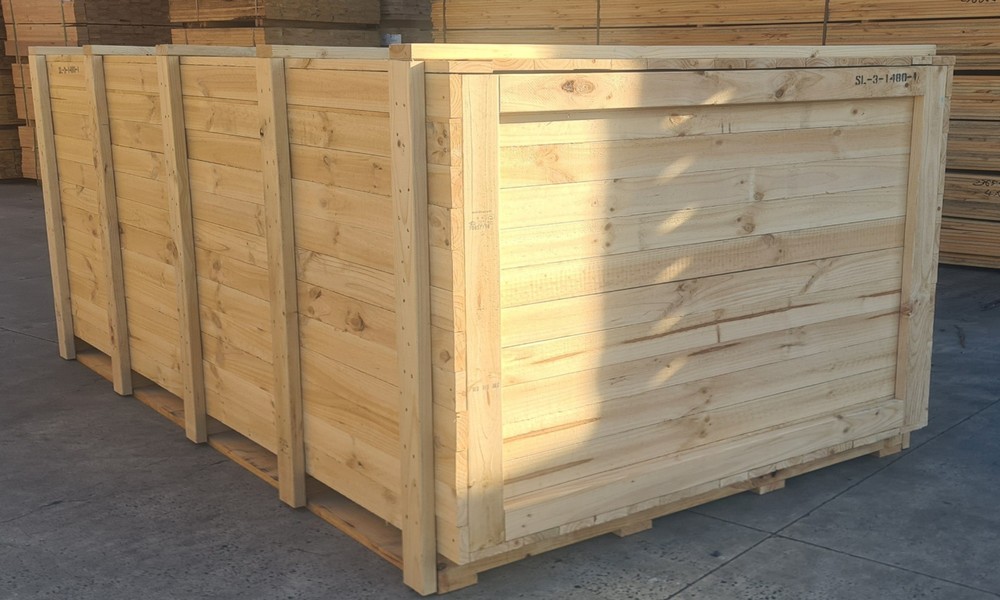
At a Glance:
- Timber packaging provides better protection than plastic or metal alternatives with impact and vibration resistance.
- In export and long-distance shipping, heat-treated timber cases remain stable, while some plastics degrade and metals may risk rusting and corrosion.
- Timber delivers superior reuse and custom-fit capability, avoiding the cracking issues of plastic and the high modification costs of metal.
Supply chains need to handle heavier, irregular and high-value goods safely. As these loads move through warehouses and storage facilities, packaging must perform reliably to prevent cargo damage.
Plastic crates have their place in light distribution and metal cases are excellent for long-term storage. But when it comes to extreme loads, timber crates are the most reliable option. When loads need better stability, impact control or a custom fit, the benefits of timber packaging become clear.
This article describes the scenarios where timber cases are the more appropriate choice. You will gain clarity on when timber delivers the strength, durability and load security needed to better support your operations and logistics.
When Maximum Load Stability Is Required
Timber cases provide a rigid structure that handles heavy, dense or uneven loads better than many plastic or metal crates. Plastics tend to flex or creep under sustained heavy loads, while metals like aluminium can deform and buckle under pressure and can add extra weight to the freight.
Timber offers consistent, reliable strength without making handling difficult, making it a practical choice for machinery, fabricated components and bulk parts. These parts often exceed the performance limits of plastic crates or can be costly to transport in heavier metal designs. Moreover, timber’s natural grain supports weight evenly and provides consistent load-bearing packaging for demanding operations.
When Goods Need Superior Impact and Vibration Control
Timber absorbs shock and vibration far more effectively than rigid plastic walls or thin-gauge metal surfaces. Both of these options tend to transfer impact directly into the cargo. During forklift transfers, rough loading or long-haul routes, this cushioning effect helps stabilise goods exposed to constant movement.
For fragile instruments, calibrated tools or sensitive assemblies, timber export cases minimise internal vibration and lower the chance of micro-damage. As a result, timber provides a more controlled protective environment for your load compared with plastic or metal crates.
When Reusable Packaging is Required
With the ability to be repaired, reinforced or easily modified, timber cases offer long-term value. In contrast, plastic crates often crack under heavy load stress, making repair and reuse difficult. Similarly, metal crates can dent and require costly fabrication work to return them to their original condition.
This is why timber provides a practical route to reusable packaging with its ability to be repaired. Industries with frequent freight cycles, such as automotive, manufacturing and equipment servicing, prefer timber cases as the cases can be reconditioned rather than replaced. Their durability over multiple trips and ability to adjust to changing load requirements offer better lifecycle efficiency than plastic or metal options.
When Custom-Built Protection Is Needed
When engineered for precise shape, weight distribution and bracing, timber offers design flexibility that plastics and metals struggle to match. Moulding constraints limit the use of plastic crates, whereas custom metal fabrication can be costly and time-consuming. Custom timber cases can be easily made to fit the item’s specific requirements, improving stability and handling performance.
This tailored construction offers secure support for irregular, oversized or multi-component assemblies that do not fit standard crate sizes. When generic plastic or metal crate designs do not provide a reliable fit, custom-made industrial wood cases offer better protective freight packaging.
Timber cases perform better than plastic and metal crates when stability, impact control, reuse and custom-fit protection are important. For businesses dealing with complex, irregular and valuable items, timber packaging provides a practical balance of strength, durability, adaptability and cost-efficiency.
If your freight requires stronger and more resilient packaging, consider how timber cases can support your operational needs. Choosing a reliable timber case supplier ensures your goods receive the protection and stability they need from dispatch to delivery.