

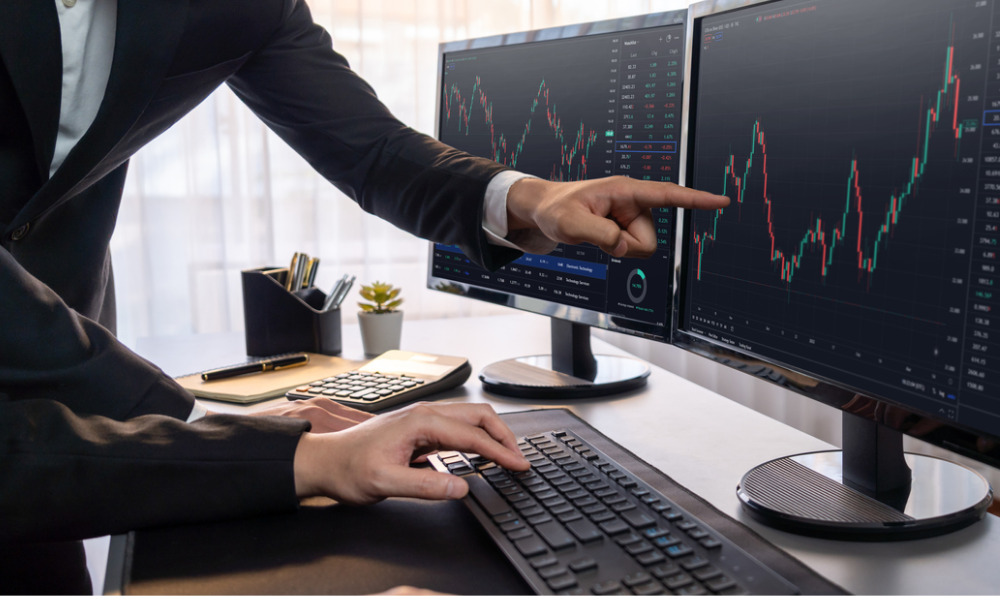
Every morning, millions of Indians wake up and reach for their phones before they reach for their tea. The first thing many of them check is not the news or their messages but the state of the equity market. For those with money invested in the market, GIFT Nifty has become the pre-dawn oracle — the number that sets the emotional tone for the day before domestic trading even begins. By mid-morning, the Sensex today figure is being quoted on television tickers, forwarded in family chat groups, and used as the basis for countless spontaneous investment decisions that often have little connection to rational analysis. This daily ritual of number-watching, deeply embedded in modern Indian investor behaviour, deserves a far more critical and informed examination than it typically receives.
The Architecture of Market Indices
To understand what index movements actually mean, it helps to understand how these indices are constructed. The Sensex is a free-float market capitalisation weighted index, which means that the contribution of each of its thirty constituent companies to the overall index movement is proportional to the market value of its freely tradable shares, not its total shares outstanding.
This construction has important implications. A handful of very large companies — dominant private sector banks, a major technology conglomerate, leading consumer goods businesses — carry disproportionate weight within the index. When these large-cap stocks move significantly in either direction, the index moves with them regardless of what is happening across the broader market. The Sensex can rise on a given day while the majority of listed stocks are actually declining, simply because a few heavyweight components are performing strongly.
This phenomenon — known in market parlance as a narrow rally — is common during periods of selective institutional buying. An investor who sees the index at a record high and concludes that the entire market is richly valued may be drawing the wrong conclusion. Simultaneously, an investor who sees the index fall and assumes all their holdings have declined equally will also frequently be wrong.
The Role of Institutional Activity in Driving Daily Moves
On any given day of buying and selling, the dominant pressure that shapes Sensex and Nifty momentum is not the collective actions of retail investors however buying and selling choices of huge institutional members — housing mutual funds, insurance companies and foreign portfolio investors. The mixed daily turnover of their members dwarfs that of traders, and their instructions leave clean footprints in index performance.
Foreign equity investor flows are recorded on a daily basis using the SEBI stock exchanges, and they can be scrutinised vigorously through market figures as they carry heavy weight in determining short-term and medium-term market trends when foreign institutional buyers are consistent customers for some periods. There is a tendency to keep the internet. When they become sellers — often in response to changes in the beauty of the rupee, uncertainty in the home market, or reassessments of threats in emerging markets — even fundamentally strong markets can experience sharp corrections.
Domestic institutional buyers, particularly mutual funds operating with the help of a steady stream of SIPs from retailers, have emerged in recent years as an important counterweight to foreign selling stress. This development has provided a degree of flexibility in the Indian markets that was largely absent a decade ago.
Volatility as Information, Not Just Discomfort
Most retail investors experience market volatility as an emotionally unpleasant phenomenon — something to be endured until calm returns. Sophisticated investors interpret volatility very differently. They understand that large price swings, whether intraday or across sessions, are the market’s mechanism for repricing assets in response to genuine uncertainty about the future.
High volatility periods in Indian markets — whether triggered by election outcomes, RBI policy surprises, global risk events, or sector-specific regulatory changes — often contain some of the best buying opportunities for investors with the analytical framework to identify quality businesses and the patience to wait for them to reach attractive valuations. The willingness to act during periods of elevated fear, rather than retreating to the sidelines, is one of the defining characteristics of investors who generate superior long-term returns in Indian equities.
The Psychological Trap of Monitoring Too Closely
Research in the field of behavioural finance consistently shows that the more often an investor combines their portfolio with video impressions, the more likely they are to make bad decisions. Fluctuations in daily premiums trigger loss aversion — the well-documented human tendency to experience losses more acutely than equivalent gains — and this emotional response produces a bias near the task such that a state of inaction is most appropriate.
An investor who checks their portfolio a few times a day in the context of a correction will feel pressured to contribute to ease the psychological pain of falling prices. The same investor who quarterly reviews their portfolio may see a decline in context — as part of a broader trend that history suggests will eventually reverse — and may be much more likely to stay far away or propose thoughtful positions.
Building a Framework That Transcends Daily Market Noise
The most practical gift that financial education gives an investor is the ability to contextualise daily market information rather than react to it. Knowing that indices are construction-dependent, that institutional flows drive short-term direction, that pre-market futures signal sentiment rather than certainty, and that volatility is cyclical and mean-reverting — this knowledge forms a mental framework that makes daily market numbers informative rather than alarming.
India’s long-term equity story remains compelling. Demographics, urbanisation, formalisation of the economy, and expanding financial inclusion all point toward a market that will be significantly larger and more liquid a decade from now than it is today. The investors who benefit most from this journey will be those who use daily market information as one input among many rather than the primary driver of their decisions.